 La Pine, Oregon · CCB #260092
Excavation
Foundations, footings, trenching, and utility work — cut to line and grade.
- Oregon CCB #260092
- DEQ SDS #39968
- Bonded & insured
- La Pine · Sunriver · Bend · Redmond · Sisters
Foundations and footings
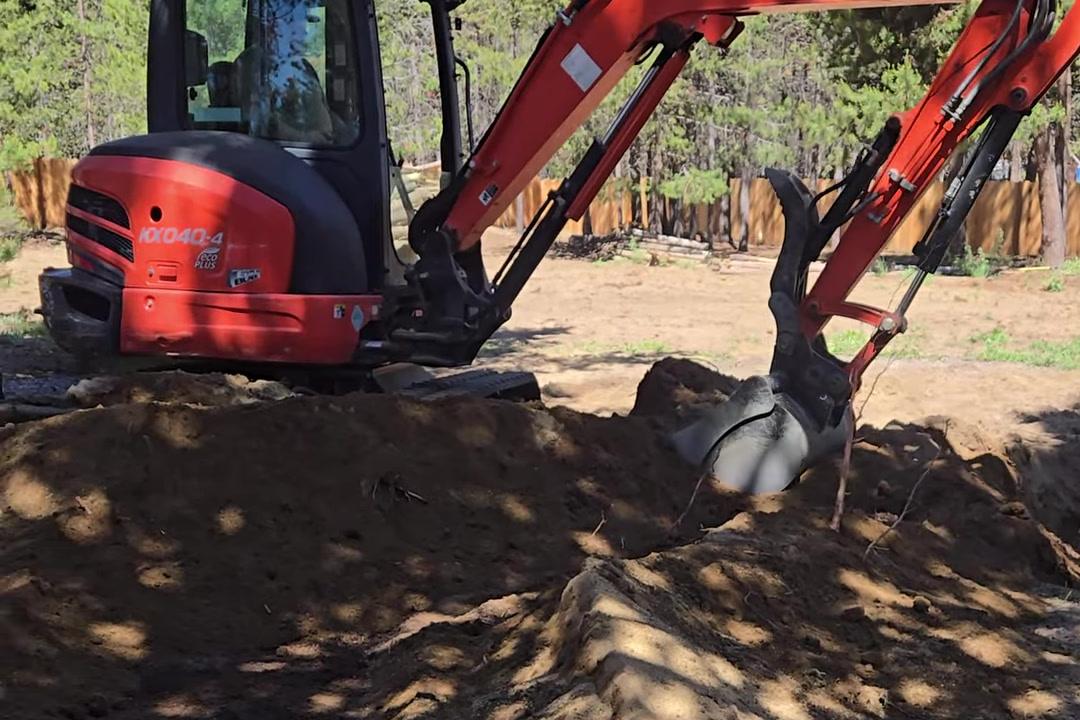
Footing excavation is cut to the plan dimensions and to the elevation the engineer specified, not to whatever depth the machine happens to reach. Over-excavating means placing and compacting engineered fill to bring it back, which is time and money nobody budgeted for.
Frost depth requirements and setbacks vary by jurisdiction. We work to the plan and to the inspector rather than to a rule of thumb picked up somewhere else.
Trenching
Water, power, gas, communications, and septic lines all have their own depth requirements, bedding specifications, and separation distances from each other.
Bedding material matters more than people expect. A pipe laid on rock in a trench is a pipe with a stress point on it, and it will find that point eventually. Sand or fine bedding under and over the pipe is not optional.
Backfill gets compacted in lifts. Trench backfill that settles leaves a visible line across a yard or a driveway a year later, and that line usually means the pipe below has moved too.
Rock
Shallow basalt is common around here and it changes both the method and the cost. Depending on depth and extent, that means hammer work, a change in the routing, or a conversation about whether the plan needs adjusting.
Finding rock at the estimate stage rather than mid-job is worth the site walk.
Working around what is already there
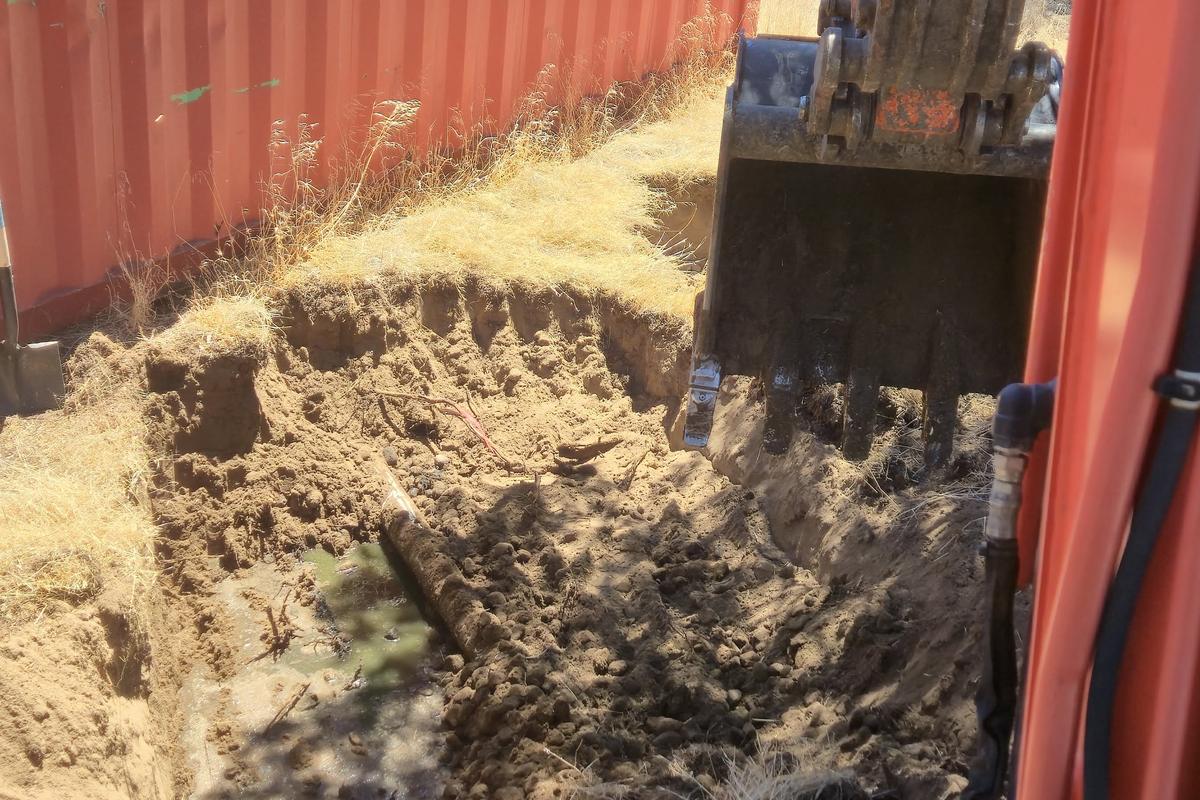
Existing utilities, old septic lines, and buried structures that never made it onto any drawing are a normal part of residential excavation. Locates get called before we dig, and where records are unreliable we pothole rather than assume.
Thirty years of pit and reclamation work is largely an education in what turns up under things.
What this covers
- FOOTING AND FOUNDATION EXCAVATION
- UTILITY TRENCHING
- WATER AND SEWER LINES
- ELECTRICAL AND CONDUIT TRENCHING
- PIPE BEDDING AND BACKFILL
- ROCK EXCAVATION
- BASEMENT AND CRAWLSPACE DIGS
Have an engineer's plan?
Send it with your request. Footing dimensions and bearing elevations answer most of what we would otherwise ask.
Common questions
How deep do footings need to be excavated?
To the exact elevation the engineer specified, not a rule-of-thumb depth. Frost depth requirements and setbacks vary by jurisdiction, so we work to the plan and the inspector rather than a number picked up elsewhere.
Why does bedding material matter for trenching?
A pipe laid on rock has a stress point that will eventually find it. Sand or fine bedding under and over the pipe, plus backfill compacted in lifts, is what keeps a trench from settling and showing a visible line a year later.
How does rock affect excavation cost and timeline?
Shallow basalt is common in this area and changes both method and cost — sometimes hammer work, sometimes a routing change. Finding it at the estimate stage, during the site walk, is far better than finding it mid-job.
What happens if you hit an unmarked utility or old septic line while digging?
It's a normal part of residential excavation here. Locates are called before we dig, and where records are unreliable we pothole to confirm what's actually there rather than assume.
What should I send with an excavation estimate request?
An engineer's plan if you have one. Footing dimensions and bearing elevations answer most of what we'd otherwise need to ask on-site.
Tell us about the site.
Estimates are free, and we would rather look at it in person than guess.