 La Pine, Oregon · CCB #260092
Driveways & access roads
New driveways, access roads, repair, and regrade across south Deschutes County.
- Oregon CCB #260092
- DEQ SDS #39968
- Bonded & insured
- La Pine · Sunriver · Bend · Redmond · Sisters
A driveway is three things, and only one of them is visible
What you see is the surface. What determines whether it is still there in five years is the subgrade underneath it and where the water goes.
A driveway that drains and a driveway that does not cost roughly the same to build. One of them washes out the first hard winter and the other does not. The difference is decisions made before any rock gets placed.
Subgrade
Everything starts with what the rock sits on. Soft spots, organic material, and uncompacted fill will telegraph through any thickness of surface material given a season or two.
On central Oregon lots this usually means dealing with pumice, which compacts differently than the clays and gravels most spec books assume, and sometimes hitting rock that changes the approach entirely. We strip what needs stripping, and compact what stays.
Where the subgrade is genuinely bad, geotextile fabric between the ground and the base rock is cheap insurance. It keeps the rock from migrating down into soft material, which is the most common way a driveway quietly disappears.
Base rock and compaction
Depth depends on what is underneath and what will drive on it. A passenger-car driveway over good subgrade needs less than an access road that has to carry a concrete truck or a loaded gravel truck.
Material matters as much as depth. Well-graded crushed rock with a range of particle sizes locks together under compaction; round river rock and single-size material do not, and stay loose no matter how many passes you make.
Compaction is done in lifts, not in one pass over a full depth. Rock dumped and bladed level is not a compacted base, even though it looks identical the day it goes in.
Crown, ditching, and where water goes
The surface should shed water to the sides rather than hold it. A crown of roughly two percent is not visible to the eye but moves a substantial amount of water off the driving surface.
Water has to go somewhere once it leaves the driveway. On a sloped site that means ditching, culverts under the driveway where it crosses drainage, and a plan for where the runoff ends up that does not involve a neighbor or a foundation.
In our climate, standing water plus freeze-thaw is what destroys surfaces. Water that drains away does very little damage.
Repair and regrade
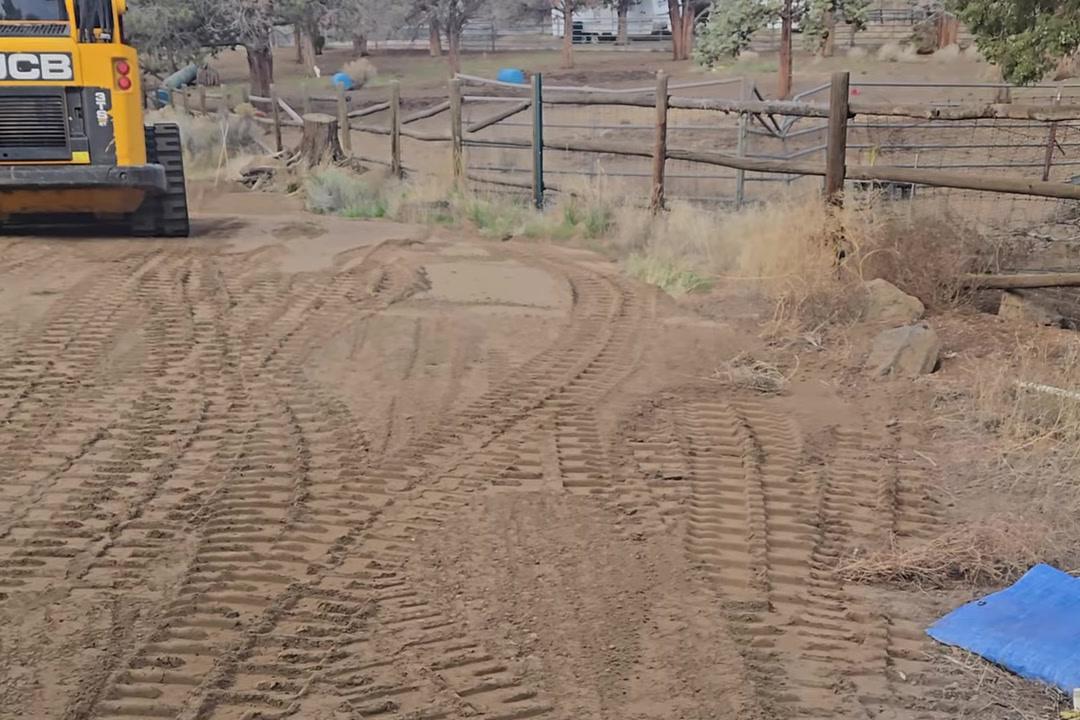
Existing driveways worn down to exposed rock, rutted, or holding water can usually be brought back without starting over. That means regrading the existing surface, addressing whatever caused the failure, and placing new material over a corrected base.
Grading around an exposed rock rather than dealing with it puts the same rock back on the surface within a season. Bury it properly or remove it.
What this covers
- NEW DRIVEWAY CONSTRUCTION
- ACCESS AND FOREST ROADS
- SUBGRADE PREP AND COMPACTION
- BASE ROCK PLACEMENT
- CROWN AND DITCHING
- CULVERT INSTALLATION
- REPAIR AND REGRADE
- SNOW-SEASON PREP
Building a new home?
The driveway needs to carry concrete trucks and delivery loads before it ever carries your car. Build it for the construction phase and the rest is easy.
Common questions
Why do driveways in central Oregon fail so often?
Usually a subgrade problem, not a surface one. Soft spots, uncompacted fill, or rock dumped and bladed level instead of properly compacted will telegraph through the surface after a season or two, and freeze-thaw makes it worse.
What's the right base for a long-lasting driveway here?
Well-graded crushed rock, not round river rock or single-size material, compacted in lifts over a prepared subgrade. On soft ground, geotextile fabric between the ground and base rock keeps the rock from migrating down into the soil.
How much crown does a driveway need?
A crown of roughly two percent isn't visible to the eye but moves a substantial amount of water off the driving surface. Standing water plus freeze-thaw is what destroys a surface — water that drains away does very little damage.
Can an existing driveway be fixed instead of rebuilt?
Usually, yes. Regrading the existing surface, addressing what caused the failure, and placing new material over a corrected base can bring back a driveway that's rutted or holding water without starting over.
Do you build driveways to handle construction traffic?
Yes — if you're building a new home, the driveway needs to carry concrete trucks and delivery loads before it ever carries your car. Building it for the construction phase makes everything after that easier.
Tell us about the site.
Estimates are free, and we would rather look at it in person than guess.